Beschreibung
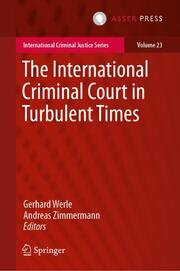
Source: Wikipedia. Pages: 29. Chapters: Adrian Fulford, Akua Kuenyehia, Anita Usacka, Anthony Carmona, Bruno Cotte, Chile Eboe-Osuji, Chris Van Den Wyngaert, Daniel David Ntanda Nsereko, Elizabeth Odio Benito, Erkki Kourula, Fatoumata Dembélé Diarra, Georghios Pikis, Hans-Peter Kaul, Howard Morrison (lawyer), International Criminal Court judges election, 2003, International Criminal Court judges election, 2006, International Criminal Court judges election, 2007, International Criminal Court judges election, 2011, International Criminal Court judges election, January 2009, International Criminal Court judges election, November 2009, Judges of the International Criminal Court, Karl Hudson-Phillips, Kuniko Ozaki, Navanethem Pillay, Next election of judges of the International Criminal Court, Olga Venecia Herrera Carbuccia, Presidency of the International Criminal Court, René Blattmann, Robert Fremr, Sanji Mmasenono Monageng, Silvia Fernández de Gurmendi, Sylvia Steiner, Tuiloma Neroni Slade. Excerpt: The eighteen judges of the International Criminal Court (ICC) are elected for nine-year terms by the member-countries of the court. Candidates must be nationals of those countries and they must "possess the qualifications required in their respective States for appointment to the highest judicial offices". A judge may be disqualified from "any case in which his or her impartiality might reasonably be doubted on any ground", and a judge may be removed from office if he or she "is found to have committed serious misconduct or a serious breach of his or her duties" or is unable to exercise his or her functions. The judges are organized into three divisions: the Pre-Trial Division, Trial Division and Appeals Division. Judge Erkki KourulaJudges are elected to the ICC by the Assembly of States Parties, the court's governing body. They serve nine-year terms and are not generally eligible for re-election. All judges must be nationals of states parties to the Rome Statute, and no two judges may be nationals of the same state. They must be "persons of high moral character, impartiality and integrity who possess the qualifications required in their respective States for appointment to the highest judicial offices", and they must "have an excellent knowledge of and be fluent in at least one of the working languages of the Court" (English and French). Judges are elected from two lists of candidates. List A comprises candidates who have "established competence in criminal law and procedure, and the necessary relevant experience, whether as judge, prosecutor, advocate or in other similar capacity, in criminal proceedings". List B comprises candidates who have "established competence in relevant areas of international law such as international humanitarian law and the law of human rights, and extensive experience in a professional legal capacity which is of relevance to the judicial work of the Court". Elections are organised so that there are always at least nine serving judges fr
Herstellerkennzeichnung:
BoD - Books on Demand
In de Tarpen 42
22848 Norderstedt
DE
E-Mail: info@bod.de